




Most travelers discover hotel websites through search engines. If your site isn’t optimized for SEO, you’re missing out on highly qualified traffic — and those visitors could have been your next guests. That’s where Hotel SEO becomes a game-changer.
In this guide, you’ll learn everything you need to know about SEO for Hotels & Resorts — and how to make your property stand out in today’s competitive hospitality market.
What is Hotel SEO?
Hotel SEO refers to the process of optimizing your hotel’s online presence to improve its visibility on search engine results pages (SERPs). Whether you manage a boutique hotel, a luxury resort, or a chain of properties, the goal of Hotel and Resort SEO is to attract potential travelers who are actively searching for accommodations in your area — and to ensure your property appears right when they’re ready to book.
Why is Hotel SEO Important?
When someone searches online for a place to stay, search engines return a list of results. Most users instinctively click on the top few links, believing those to be the most relevant and trustworthy. In fact:
- The first result on Google captures over 27% of all clicks
- The click-through rate drops to just 2.2% by the bottom of the first page
- Almost no one clicks through to the second page
That means if your hotel website isn’t ranking on page one, you’re practically invisible to your target audience — and missing out on valuable direct bookings that could save you from high OTA commissions. Working with an SEO Agency for Hotels can help you climb those rankings efficiently.
How to Do SEO for a Hotel Website the Right Way
It’s essential to know which Hotel SEO tips truly work. Whether you’re managing SEO internally or working with a Hospitality SEO Agency, the following 15 practical steps will help you craft a successful strategy.
1. Define Your Target Audience
The first and most crucial step in building an SEO for Hotels strategy is to clearly define your target audience. This involves understanding the demographics, travel behavior, and booking patterns of your ideal guests. Identifying who you’re marketing to allow you to tailor your content and SEO strategy more effectively.
Examples of Target Audiences by Accommodation or Business Type:
| Millennial, thrill-seekers, and leisure travelers (families, groups) | |
| Leisure travelers, couples, families, and group vacationers | |
| Long-stay guests, families, digital nomads, and premium travelers | |
| Local food lovers, tourists, casual diners, and lifestyle seekers |
Once you’ve identified your primary audience, think about what they would type into Google when searching for accommodation.
For example, if you own or market a resort, potential search queries might include:
- Resort in [Your City]
- Best resorts in [Your City]
- Top-rated resort near [Landmark or Area]
These are called search terms or keywords. Focus on identifying a list of relevant ones for your property type and select a primary keyword to target — one that aligns closely with what your audience is likely to search for when planning their stay.
2. Begin with Keyword Research
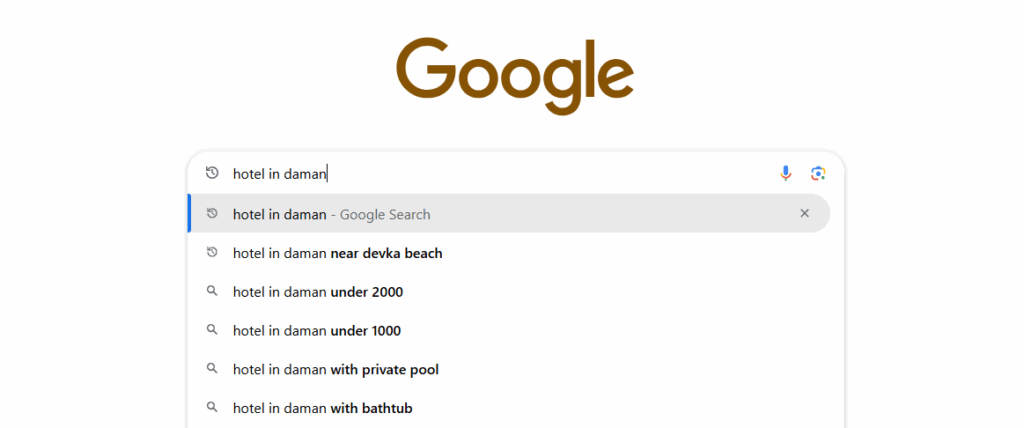
Keyword research lays the groundwork for a powerful Hotel SEO strategy. These are the specific words and phrases that your target guests are typing into search engines. Start by brainstorming all the potential queries someone might use to find accommodation in your area. For instance, if your hotel is located in Daman, useful keywords might include:
- Hotels in Daman
- Affordable hotels in Daman
- Top-rated hotels in Daman
- Hotels near Devka beach
Using the right keywords helps align your website with guest intent and aligns your brand with SEO services for the hospitality sector. While these examples are a great starting point, go further with keyword tools to discover additional variations and long-tail opportunities that can help you climb higher in search rankings.
3. Optimize the Page Title, Meta Description, and URL
These three elements form your website’s first impression on search engines and users. It’s crucial to optimize them strategically:
- Page Title (Meta Title):
Displayed on the browser tab and in search listings, this title should clearly define the page content. Include your primary keyword—like “SEO for Hotels” or “Hotel SEO Agency”—alongside your brand name and location for relevance and clarity.
- Meta Description:
This is the summary shown below the title in search results. Use compelling language and keywords like “Hotel SEO Services” or “SEO for Resorts” while including a clear call-to-action (CTA). Free tools can help you generate high-converting meta descriptions.
- URL Structure:
Keep URLs short, descriptive, and keyword-rich. For example, use “/seo-for-hotels” or “/Daman-hotel-seo-agency.” Avoid unnecessary words and ensure the URL gives a clear idea of the page’s content.
4. Refine Website Content
Begin with incorporating your target keyword (e.g., “Hotel SEO” or “SEO for Resorts”) in the H1 heading. Make sure it’s also present within the opening paragraph—ideally in the first 100 words—to establish context.
Aim for 800–1,000+ words of valuable content on your homepage. Blend your primary keyword with related terms like “SEO for Hotel Industry” or “Hotel SEO Services” to widen your keyword net and improve topical relevance.
To further grow your keyword reach, publish useful blog content. Articles like “Top Attractions in Daman” or “Unique Places to Stay in Daman” can attract organic traffic from tourists and drive bookings. Content covering local cuisine, cultural experiences, and must-see locations adds further value and positions your site as an authoritative resource.
5. Use Descriptive Alt Text for Images
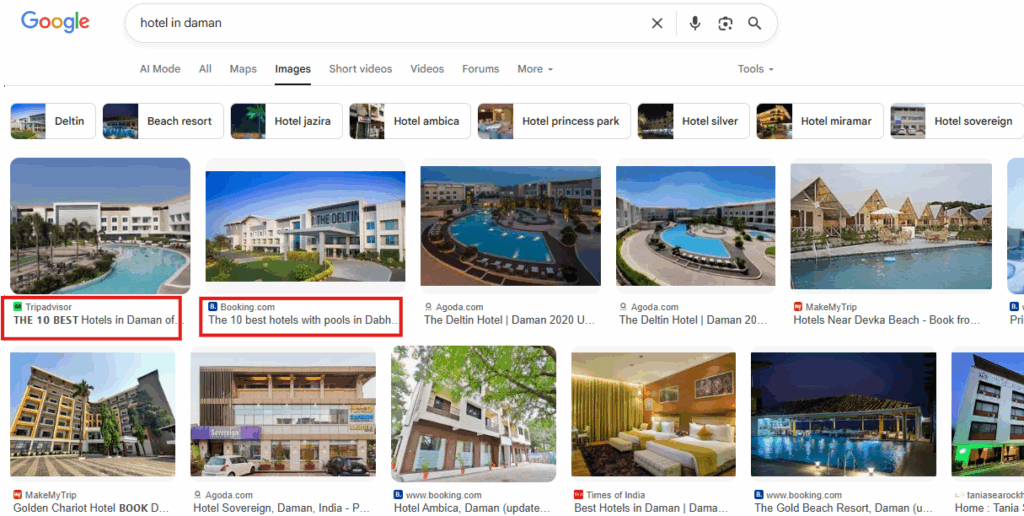
Alt text is essential for both accessibility and search visibility. Since search engines can’t “see” images, they rely on alt text to understand the image content. Properly written alt tags help images get indexed and improve SEO rankings.
Additionally, image SEO helps you rank in image-based searches—a significant traffic channel for hotels. Include relevant, keyword-rich descriptions in your image alt attributes, especially for room photos, amenities, and local attractions.
6. Organize Headings and Subheadings Properly
Headings make your content scannable and guide both users and search engines through your content’s structure.
Well-organized headings improve readability and provide natural placement for keywords. Use H1 for main topics, H2 for major sections, and H3 for detailed points. This enhances the clarity and SEO of your website content.
7. Improve Site Loading Speed
Website speed is a critical ranking factor. Visitors expect quick page loads—anything slower leads to higher bounce rates.
Compress images, leverage caching, and use performance tools to keep your pages running fast. Fast sites offer better user experience and rank higher in search results.
8. Ensure Mobile Responsiveness
A mobile-optimized website is vital for hotel bookings, as most users browse and book via smartphones.
Responsive design ensures your site works seamlessly on all devices.
This improves engagement, reduces bounce rate, and positively impacts your SEO. Make sure navigation, booking forms, and images are fully responsive.
9. Submit a Sitemap to Search Engines
An XML sitemap helps search engines crawl and index your website efficiently. It’s especially helpful for large hotel sites with frequent updates.
Submit your sitemap via Google Search Console and Bing Webmaster Tools to ensure proper indexing of all your content and pages.
10. Structure Website Content for Better Engagement
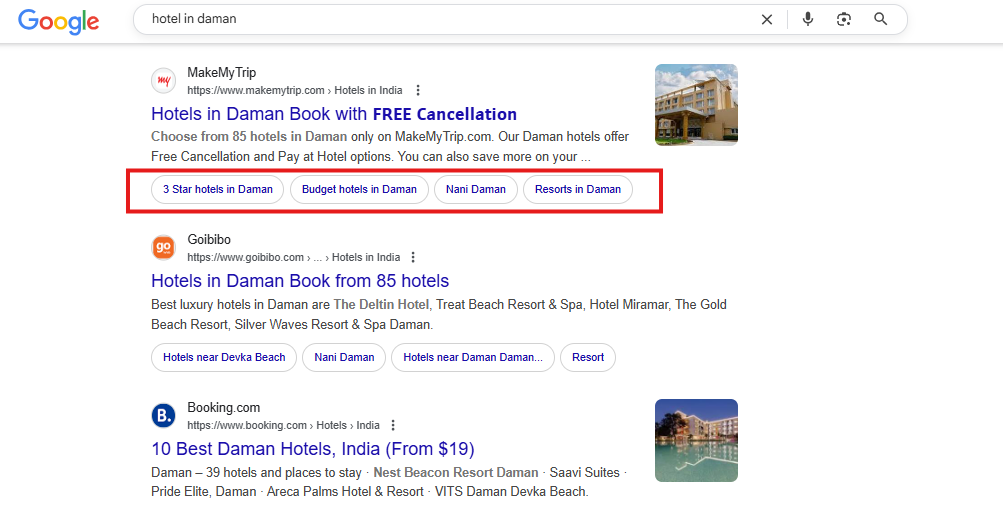
Thoughtful content structure enhances both SEO and user experience. Here’s how to organize it:
- Internal Linking:
Link key pages (rooms, amenities, attractions) to pass authority and guide users. - Highlight Key Info First:
Prioritize location, features, and CTAs at the top of the page. - Use Clear Headings:
Break up content with keyword-rich headings and subheadings. - Short Paragraphs & Bullet Lists:
Make content easy to read with compact sections and clear points. - Visual Content:
Include high-resolution images and videos of your hotel. Use keyword-optimized alt text. - Mobile Optimization:
Make sure text, images, and buttons work seamlessly on mobile. - Calls-to-Action:
Use direct CTAs like “Book Now,” “Explore Rooms,” or “Check Availability” to drive conversions.
11. Leverage Google My Business (GMB)
Google My Business is a must for local SEO. It enhances your presence in search and Google Maps.
- Claim and verify your GMB listing.
- Enter consistent Name, Address, and Phone Number (NAP).
- Place your map pin accurately.
- Add amenities such as Wi-Fi, parking, or accessibility.
- Use one account to manage listings for multiple properties.
12. Optimize for Google Hotel Search
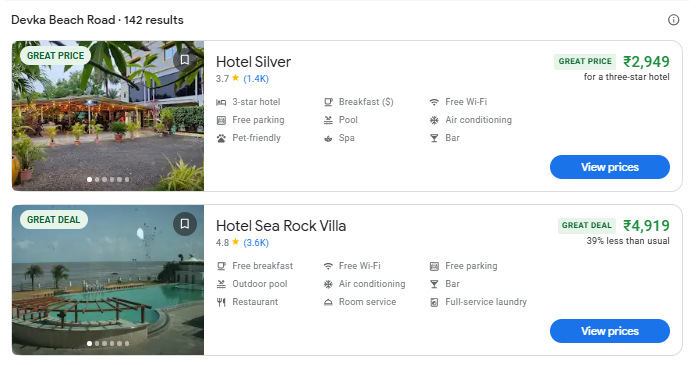
Google’s dedicated hotel search interface makes it easier for users to compare properties by location, amenities, and pricing.
To maximize visibility:
- Optimize your GMB listing with complete information.
- Use high-quality images and compelling descriptions.
- Monitor and update pricing through integrated booking systems.
- Aim to appear in the featured results with standout visuals and reviews.
13. Focus on Link Building
Backlinks enhance your Hotel SEO authority. Collaborate with travel blogs or SEO Agency for Hotels to improve your backlink profile.
- Internal Links:
Help users and search engines navigate your site. - External Backlinks:
Get links from travel blogs, tourism sites, and directories.
You can earn links by collaborating with local businesses, hosting events, or guest posting on travel-related websites. Prioritize quality over quantity.
14. Enhance Local SEO for Hotels
- Claim & Optimize Your Google Profile:
Ensure every detail—contact info, photos, amenities—is accurate and updated. - Use Location Keywords:
Incorporate location-based terms like “hotel near [landmark]” in your content. - Create Local Landing Pages:
Add pages highlighting nearby attractions, neighborhoods, or events. - Get More Reviews:
Encourage happy guests to leave reviews and respond to feedback promptly. - Directory Listings:
Submit your hotel to local directories and tourism boards. - Mobile Optimization:
Most bookings come from mobile, so ensure your site is fully responsive. - Post Local Content:
Use your blog or news section to share local event updates, festivals, or insider tips.
15. Monitor and Measure SEO Performance
Tracking is essential to understand what’s working and what needs refinement. Use the following tools:
- Local Rank Trackers: Tools like Local Falcon and BrightLocal show your rankings in specific areas.
- GMB Insights: Track actions like calls, website visits, and direction requests.
- Google Analytics: Monitor organic traffic, time on site, and conversion metrics.
- Review Monitoring: Use platforms like Yext or BrightLocal to track reviews and guest sentiment.
- Citation Consistency Tools: SEMrush and Moz Local can ensure NAP consistency across all listings.
- Automated Reporting: Set up regular reports to monitor progress and share performance data with your team.
FAQs
- How Does Local SEO Help Hotels and Resorts?
Local SEO boosts a hotel’s visibility in map packs and local searches like “hotels near me.” A strong Hotel SEO strategy that includes GMB optimization and location keywords increases direct bookings. - What Role Do Online Reviews Play in Hotel SEO?
Online reviews impact rankings and trust. Positive, recent reviews on platforms like Google and TripAdvisor enhance credibility and click-through rates, while keyword-rich review content can improve SEO relevance. - Can SEO Reduce Hotel Dependence on OTAs?
Yes. A well-executed SEO for Hotels strategy direct website traffic, reducing reliance on OTAs by capturing travelers earlier in the search journey—resulting in more direct bookings and higher profit margins. - Should I Hire a Hotel SEO Agency or Do It Myself?
Hiring an SEO agency saves time and brings faster, expert-level results. However, if you’re willing to learn and experiment, DIY SEO is possible. Many hotels start alone and later consult agencies for growth. - How Important Is Mobile Optimization for Hotel Websites?
Extremely important. Most users search and book hotels on mobile. A fast, mobile-friendly site improves user experience, lowers bounce rates, and supports better rankings on Google.